
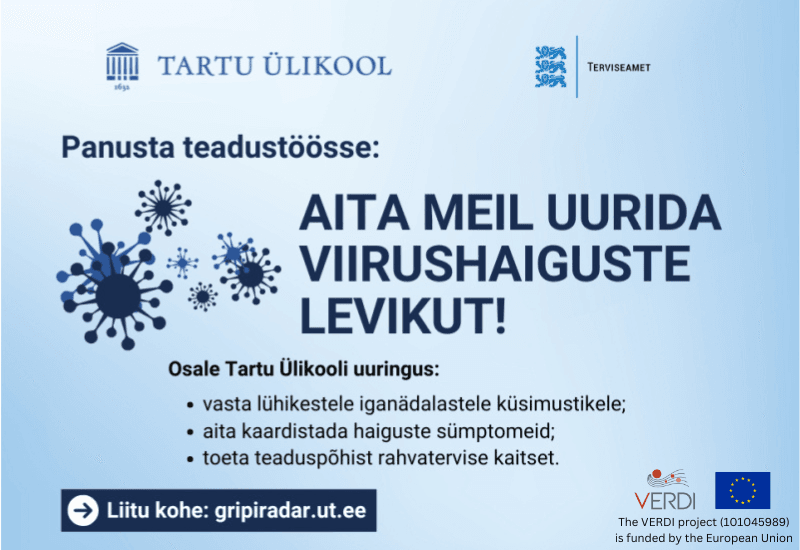
The VERDI Consortium is excited to announce the launch of Gripiradar, a new platform designed to collect data from the public to monitor the spread of viral respiratory infections in Estonia, including flu and COVID-19. This data will contribute to a study providing valuable insights into the transmission patterns and public health impact of these illnesses.
Kristi Huik, Associate Professor at the University of Tartu and member of the VERDI team working on Gripiradar, emphasises the crucial role of public involvement in this study: “We rely on the voluntary participation of the Estonian population to help us gather data on symptom spread. Citizen science is essential for monitoring respiratory diseases and understanding outbreaks of illnesses like influenza and COVID-19.“
Citizen science is a cornerstone of modern public health research. It allows widespread, real-time data collection that would otherwise be impossible. By engaging the public directly, researchers gain access to diverse experiences, including from individuals who may not visit healthcare providers when sick. This approach ensures that even mild or unreported symptoms are documented, providing a more accurate picture of disease prevalence.
Every week, residents of Estonia willing to participate in the initiative will receive an email linking to a questionnaire where they can report symptoms like fever or cough – or the lack thereof. “Even symptom-free responses are valuable,” notes Huik. “The study also considers individuals with mild symptoms who typically avoid medical attention. This broad participation helps us monitor the current prevalence of symptoms in the community.”
The study is open to all adults living in Estonia, with parents able to provide responses on behalf of their children to gather data on younger populations. Participation is voluntary, and individuals can opt out at any time. If you are interested to participate in this Citizen Science effort, please register here: https://gripiradar.ut.ee.
Gripiradar has been developed thanks to European Union funding through the VERDI project, along with support from the VERDI Consortium. It is part of the InfluenzaNet international scientific collaboration. Study findings will contribute to understanding the dynamics of infectious diseases in Estonia and across Europe, with results shared as scientific insights and statistical analyses.